
From 50% to 150% How Smart Lesson Planning Multiplies Teacher Effectiveness.
Smart Lesson Planning Series Blog 3.
Most school leaders ask:
“How do we make our teachers more effective?”
The instinctive answer is more training, more workshops, more observations.
All of that helps—but it misses a simple truth:
A teacher’s effectiveness is not only about their skill. It’s about the system that supports their planning.
At MyQampus, we’ve seen teachers go from exhausted and reactive to calm and highly effective simply by changing how they plan, not who they are.
1. The 50% Effectiveness Trap:
Let’s look at a typical week without smart lesson planning.
- 15 hours: creating lesson plans from scratch.
- 25 hours: teaching.
On paper, it looks fine: 40 hours of “work.”
But inside the classroom:
- Lab equipment wasn’t arranged → 1 period wasted.
- Activity took longer than expected → another period lost.
- Some topics rushed, some skipped.
- Students are confused because pre-requisite concepts weren’t revised.
Out of 25 teaching hours, maybe only 12–13 periods feel truly effective. That’s roughly 50% real effectiveness. The rest is firefighting.
2. What Changes with Smart, Reusable Plans:
With MyQampus Syllabus & Lesson Planner, the same teacher.
- Spends 3 hours updating and refining existing plans.
- Spends 37 hours teaching, with,
a)Clear objectives.
b)Time allocations tested in previous years.
c)Activities that are known to work.
d)Notes on where students usually struggle.
Because the planning is smarter, less energy is wasted on improvising. Now, instead of 12–13 effective periods, the teacher delivers;
a) 20–22 really solid, productive lessons each week. That’s almost double the impact—without increasing working hours.
3. The Compounding Effect Over 3 Years:
Year 1:
- Teacher creates baseline lesson plans.
- Tries activities, makes mistakes, learns.
Year 2:
- Teacher updates plans based on last year’s notes.
- Removes what didn’t work, keeps what did.
- Predicts timing more accurately.
Year 3:
- Plans are refined, tested, and tightly aligned to outcomes.
- Less mental load, more focus on student engagement.
- Because MyQampus keeps track of all this, each year doesn’t feel like starting again—it feels like leveling up.
By Year 3, the same teacher:
- Uses fewer hours on planning.
- Teaches more confidently.
- Handles questions better.
- Creates richer classroom experiences.
In practical terms, their effectiveness can be 2–3x higher than in Year 1.
4. Before & After: A Week in a Teacher’s Life:
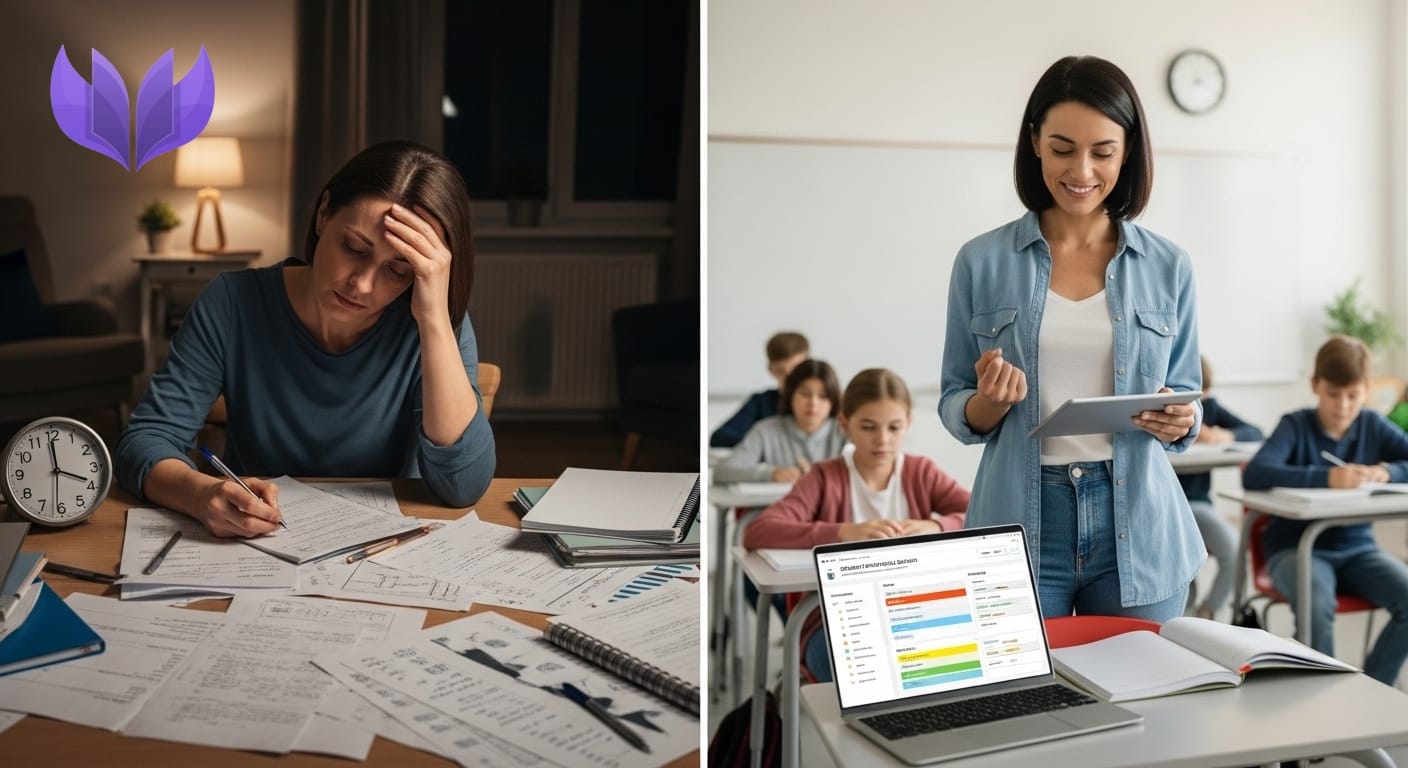
Before MyQampus,
Sunday: 3–4 hours of anxious planning.
Weekdays: constantly tweaking mid-class, looking for resources, feeling under prepared.
Friday: exhausted, unsure what worked.
After MyQampus,
Sunday: 45 minutes reviewing next week’s plans inside MyQampus.
Weekdays: walks into class with a clear flow, resources listed, activities ready.
Friday: adds quick notes like “students loved X” or “next year add more examples here” The difference? Not more pressure. Just better support.
5. Why This Matters for School Leaders:
When planning becomes smarter.
Teachers stop drowning in admin.
Students experience consistently better teaching.
Leaders can focus on coaching, not chasing planners.
The school can honestly say, “We help teachers do their best work.”
At MyQampus, we don’t just digitise lesson plans.
We help schools multiply the impact of every teaching hour.
FAQs – Teacher Effectiveness & Lesson Planning:
1. Do teachers feel controlled when using a central lesson planner?
Our experience says no—if it’s framed correctly. MyQampus is a support tool, not a surveillance tool. Teachers still own their style; the system just helps them be more prepared.
2. Can teachers customise shared lesson plans?
Yes. They can adapt activities, add local examples, adjust pacing, and make the plan their own while staying aligned with curriculum outcomes.
3. Does smart planning replace teacher creativity?
Not at all. It frees up mental space so teachers can be more creative, not less. They no longer waste energy on basic structuring and can focus on engagement.
4. How can school leaders measure effectiveness with MyQampus?
Leaders can see which chapters are planned, how far each class has progressed, and where delays are happening. Combined with exam data, this gives a much clearer picture of teacher impact.
5. Is MyQampus suitable for schools that already use Google Docs/Sheets for planning?
Yes. Many schools move from scattered Docs and Sheets into MyQampus to gain structure, reuse, visibility, and alignment. You can start small and transition gradually.