
The Parents Problem: Why School Apps Get Deleted Within a Week.
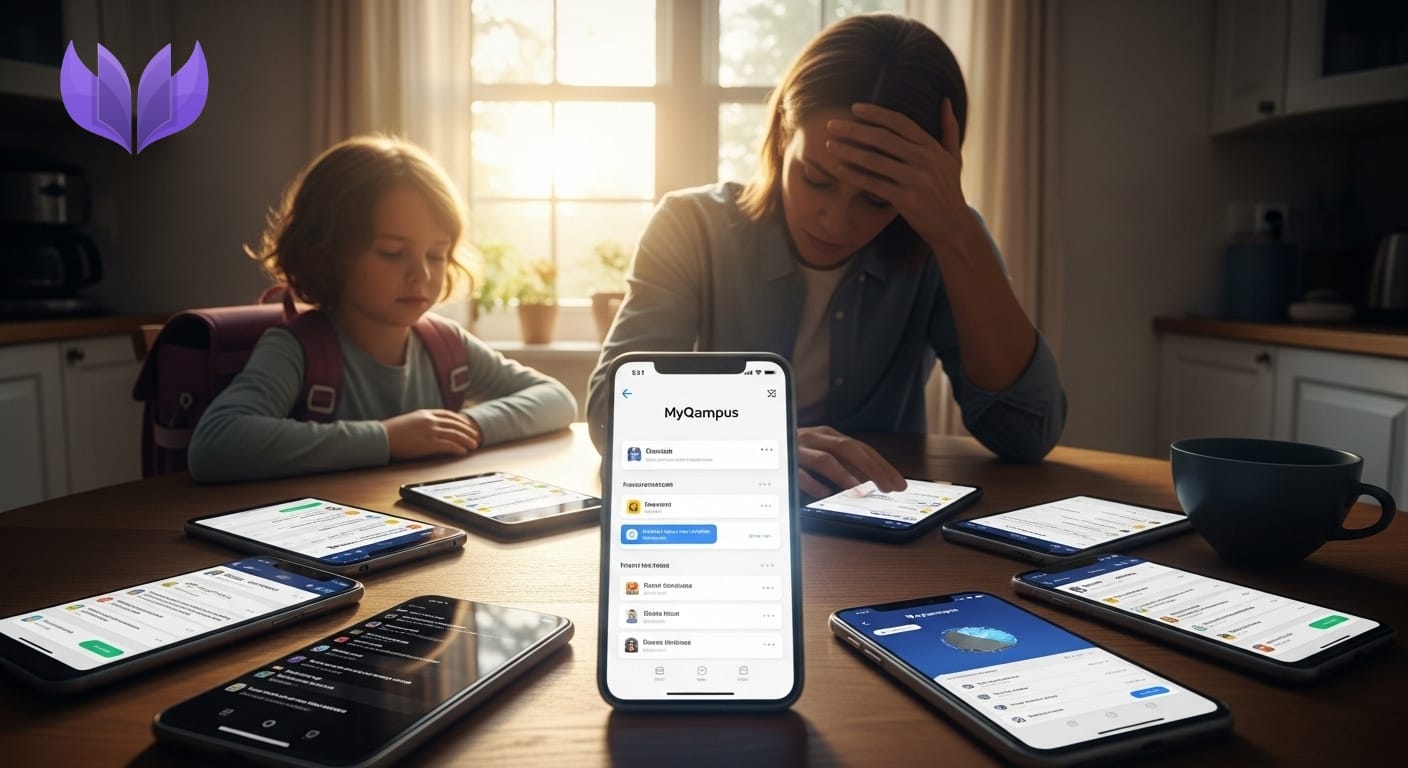
Downloaded and Forgotten!
It always starts with excitement.
Your school launches a shiny new app. You’ve spent months preparing—training teachers, sending announcements, printing QR codes for parents to download.
Week 1: 400 downloads.
Week 2: 150 active users.
Week 4: 43 active users.
By the third month, the app is a ghost town. The WhatsApp groups are alive again. Parents are back to phone calls, and your “digital transformation” feels like a false start.
Sound familiar? You’re not alone. Nearly 80% of school apps fail within the first 90 days—not because parents don’t care, but because these apps were never built for their lives.
Why Parents Delete School Apps:
1. “I Need to Open 5 Different Apps”:
Imagine being a parent juggling work calls, lunch boxes, and homework reminders—and still needing to open five different apps:
1 App A for attendance.
2 App B for fees.
3 App C for exam schedules.
4 WhatsApp for updates.
5 Email for newsletters.
6 SMS for alerts.
Parents don’t want to play digital hide-and-seek with their child’s data. They want one app, one login, and everything in one place.
When your app covers only 20% of their needs, it’s deleted faster than you can say “update available.”
2. “Nothing Is Real-Time”:
A parent opens your app at 10 a.m.—attendance still shows yesterday. Fee status says “processing.” Exam results? “Coming soon.”
Meanwhile, other parents are already sharing screenshots in WhatsApp groups.
If your app feels like reading yesterday’s newspaper, it fails.
Parents live in the now. Real-time means the second something changes, they see it.
3. “I Can’t Actually Do Anything”:
Most school apps act like bulletin boards. You can read notices, but not take action. Parents can’t:
1 Submit a leave request.
2 Authorise a new pickup person.
3 Schedule a meeting.
4 Update their contact info.
So what do they do? Call the school office.
If your app doesn’t reduce calls, it’s not solving problems—it’s creating new ones.
4. “The App Is Slower Than Calling You”:
Imagine this:
A parent wants to know if tomorrow is a holiday. The app takes 15 seconds to load, then another 10 seconds to find the calendar.
They could’ve called the receptionist and got the answer in 30 seconds.
Speed is trust.
When apps lag, parents bail.
5. “I Get 50 Notifications a Day”:
1 Morning: attendance alert.
2 Afternoon: lunch menu.
3 Evening: homework reminder.
4 Night: tomorrow’s schedule.
By the end of the week, parents mute everything—and miss the one notification that actually matters: “Your child is sick.”
Notification fatigue kills engagement faster than bad UX ever could.
What Parents Actually Want:
After implementing MyQampus in 500+ schools across the U.S. and beyond, here’s what truly drives long-term parent engagement.
1. Unified Access:
One app for everything:
1 Attendance (real-time).
2 Fees and payment history.
3 Exam schedules and results.
4 Assignments and communication.
5 Event calendar.
6 Leave requests and pickup authorisations.
Parents log in once. They see everything—no switching, no confusion, no chaos.
2. Real-Time Information:
When a teacher marks attendance at 8:15 a.m., the parent sees it instantly.
When a payment is processed, the balance updates immediately.
When results are published, parents get notified right away.
That’s how trust is built—through real-time truth.
3. Actionable Interface:
A parent shouldn’t need to call or email for basic tasks.
With MyQampus, they can:
1 Submit a leave request with dates and reasons.
2 Authorise a temporary pickup person with a photo.
3 Schedule a parent-teacher meeting.
4 Pay pending fees instantly.
5 Reply to teachers directly.
In one app, in one minute.
4. Smart, Not Spammy Notifications:
MyQampus is built with notification intelligence:
1 Routine updates are batched into a morning digest.
2 Urgent alerts (like absences or failed payments) send instantly.
3 Parents can control what they receive.
4 “Remind me later” and “Snooze” options reduce fatigue.
Parents stay subscribed because notifications are useful, not overwhelming.
5. Speed That Respects Their Time:
1 Opens in under 2 seconds.
2 Core actions available in one tap.
3 Works offline when needed.
4 Doesn’t force weekly updates.
MyQampus is designed to be faster than calling the school.
The Engagement That Follows:
Schools using MyQampus see results that last:
Metric Improvement
Daily Active Parents 80%+
“What Did I Miss?” Calls ↓ 95%
Parent-Teacher Interactions ↑ 3x
Online Fee Collection ↑ 90%
Event Attendance ↑ 40%
When communication is real, friction less, and fast, engagement becomes natural.
The Investment That Actually Works:
You’ve probably already tried:
1 SMS gateways → ignored
2 Email newsletters → unread
3 WhatsApp broadcasts → chaotic
4 “Free” apps → deleted
But MyQampus works differently.
It’s designed around the parent’s life—rushed mornings, office calls, and evening homework chaos. It fits into their day seamlessly.
That’s why 9 out of 10 parents keep it installed.
The Bottom Line:
Parent engagement isn’t about forcing adoption.
It’s about making your digital platform so useful that not using it feels like missing out.
When your WhatsApp group has 200 active parents but your app has 30—it’s not a parent problem.
It’s a product problem. Fix the product. The engagement will follow.
Frequently Asked Questions (FAQ):
1. How much does MyQampus cost?
Pricing starts at $49/month per campus, with scalable plans based on student count and features.
2. Can parents use MyQampus on both iOS and Android?
Yes. MyQampus offers native apps for both platforms, plus a responsive web portal.
3. How does MyQampus ensure real-time updates?
Our cloud-based architecture syncs instantly with teacher and admin activity—no overnight delays.
4. Is parent data secure?
Absolutely. MyQampus follows strict U.S. data privacy and FERPA compliance, ensuring every record is encrypted and access-controlled.
5. Can MyQampus integrate with existing school systems?
Yes. MyQampus integrates with your finance, attendance, and ERP systems to keep everything unified.