
The School Safety Feature Every Parent Wishes Existed.
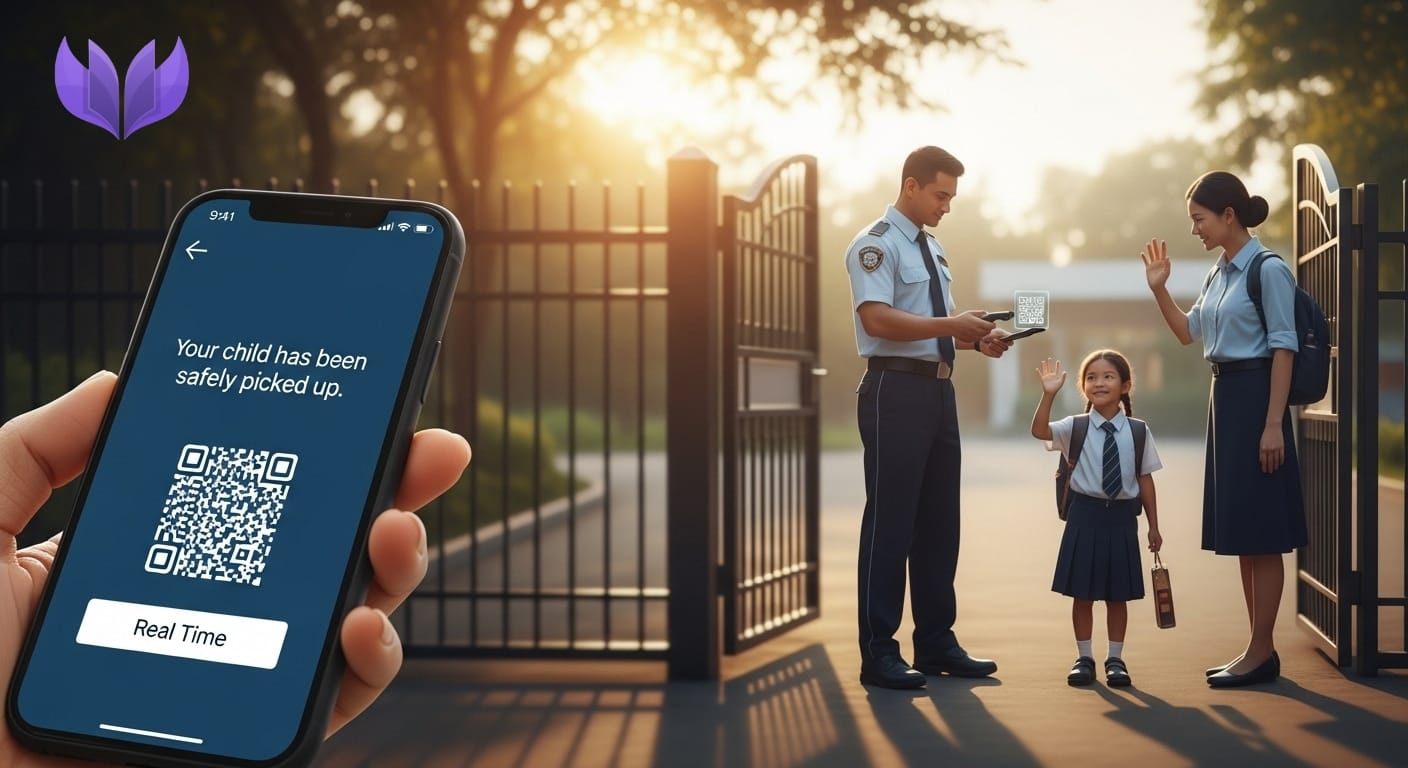
Every Parent’s Nightmare.
It’s 3:10 PM at Maplewood Elementary in Boston.
Parents gather outside the gates, chatting about homework and weekend soccer practice. Inside, the receptionist’s phone rings.
A man at the counter says calmly, “Hi, I’m here to pick up Ethan Parker, Grade 3. His Mom asked me to come.”
The receptionist freezes. Ethan’s Mom didn’t mention anything about someone new.
She has three choices—none of them safe:
1 Check a paper list that might be outdated.
2 Call the class teacher (who’s busy with twenty-five students).
3 Or simply trust the stranger.
Get it right, and Ethan goes home safely. Get it wrong, and it’s every parent’s nightmare.
This scenario happens hundreds of times every day in schools across the world. Most rely on paper lists, Whats App messages, or phone calls—systems built on good intentions, not good security. And in 2025, that’s no longer enough.
The Pickup Problem No One Talks About:
Modern school life is complicated. Families change, caregivers rotate, and schedules shift constantly.
1 Parents separate—custody rights evolve.
2 Grandparents visit for the holidays.
3 The regular driver calls in sick.
4 A new babysitter starts tomorrow.
Every one of these scenarios changes who’s authorised to pick up a child. Yet most schools track this information through sticky notes or verbal reminders. By the time details reach the gate, they’re often outdated—or missing entirely.
Even worse, different staff handle different steps: parents inform teachers, teachers inform reception, reception tells security—until one missed message breaks the chain.
The result? Either hyper-strict gates that frustrate families, or dangerously relaxed ones that expose children to risk. Neither is acceptable.
The Smart Pickup System Parents Dream About:
That’s where the MyQampus Smart Pickup System changes everything. It transforms a stressful, error-prone process into a seamless digital workflow powered by granular authorisation, instant verification, and live alerts.
Here’s how it works.
1. Multi-Level Authorisation:
Parents manage pickup permissions right from their MyQampus app.
1 Primary guardians – mother and father (permanent access).
2 Secondary guardians – grandparents, uncles, aunts (permanent).
3 Regular authorised persons – driver, nanny, caretaker (with verified photo ID).
4 Temporary pickups – neighbour, friend, or relative (specific dates only).
Every person’s photo, ID proof, and relationship are stored securely. Parents have full control—no paperwork, no confusion.
2. Real-Time Pickup Requests:
Need to authorise a one-time pickup? Parents simply.
1 Enter the person’s name and number.
2 Upload a photo.
3 Choose pickup time.
4 Submit the request.
The school admin approves it digitally, and the security guard sees the updated authorisation instantly. No phone calls, no waiting.
3. QR Code Verification at the Gate:
Authorized persons receive a secure QR code. At pickup time:
1 They present the code.
2 The guard scans it using the MyQampus tablet.
3 The system displays the child’s name, class, parent details, and authorisation photo.
The guard confirms the match and releases the student—all in under 15 seconds.No guesswork. No delays. Just precision.
4. Instant Parent Notifications:
The moment a pickup happens, the parent receives a push notification.
“Ethan Parker was picked up by John Miller at 3:45 PM.”
If it’s unexpected, the parent can tap “Alert School” instantly. Every pickup creates a time-stamped, tamper-proof digital record.
5. Smart Safety Rules:
The MyQampus system goes beyond convenience—it enforces safety logic automatically.
1 Students cannot be released to anyone not pre-approved.
2 If one guardian is legally restricted, the system blocks that profile.
3 Unusual pickup times trigger extra verification.
4 If the same person collects multiple children, the system cross-checks each authorisation.
It’s artificial intelligence with a human heart—built to protect.
6. Emergency Pickup Protocols:
Emergencies happen. Parents get stuck in traffic or meetings run late.With MyQampus, authorisation can be created in under five minutes:
1 Parent submits an emergency request via the app.
2 School admin approves it on their phone.
3 Security instantly sees the new authorisation.
From panic to peace—fast.
The Real-World Impact:
For Parents: Total peace of mind. They know exactly who picked up their child and when—no more anxious waiting.
For Schools: Fewer phone calls, fewer disputes, and complete accountability. Every pickup is logged and traceable.
For Children: A calm, safe routine. No confusion, no long waits, no fear.
The Numbers Tell the Story:
At Riverside Academy (500 students).
| System Type | Avg Pickup Time | Staff Hours/Week | Conflicts per Month |
|---|---|---|---|
| Manual System | 3 min per pickup | 50 hrs | 8–10 |
| MyQampus Smart Pickup | 15 sec | 4 hrs | 0–1 |
Beyond the numbers lies something priceless—a child who reached home safely because the system caught an unauthorised attempt in time.
Why It Matters:
School safety isn’t just about CCTV cameras or tall gates. True safety begins with intelligent systems that prevent mistakes before they happen.
Every parent asks one question before enrollment:
“Will my child be safe here?”
With MyQampus, schools can finally answer with confidence:
“Yes—because we’ve built systems that make safety non-negotiable.”
That’s not a feature. That’s your reputation.
FAQs:
1. Why is the traditional pickup process unsafe?
Because it relies on human memory and paper records, which are slow, error-prone, and impossible to audit.
2. How does the MyQampus Smart Pickup System improve safety?
It uses verified profiles, digital approvals, QR code scans, and instant notifications to ensure only authorised persons can pick up students.
3. Can parents update pickup permissions anytime?
Yes, through the MyQampus mobile app—instantly, with full control.
4. What about data privacy?
All data is encrypted and stored on secure, compliant servers, aligning with FERPA and GDPR standards.
5. Is it suitable for small schools too?
Absolutely. Whether 100 students or 5,000, the system scales effortlessly, reducing liability and staff workload.